Have you ever found a sewing pattern, followed the instructions to a T, and ended up with a garment that looks... well, completely different from the photo on the envelope?Before you blame your sewing machine or your skill level, look at the fabric. The biggest secret in the sewing world is that the fabric does 50% of the work. If you swap a crisp cotton for a slinky rayon, you aren't just changing the color you’re changing the architecture of the garment.
To become a master sewist, you have to be a bit of a fabric scientist. You have to study, experiment, and learn how fibers behave. Here is a breakdown of the best beginner fabrics and why your choice changes everything.
1. The Tale of Two Tops: Cotton vs. Muslin
Let’s look at a real-world example: the Lani Top.
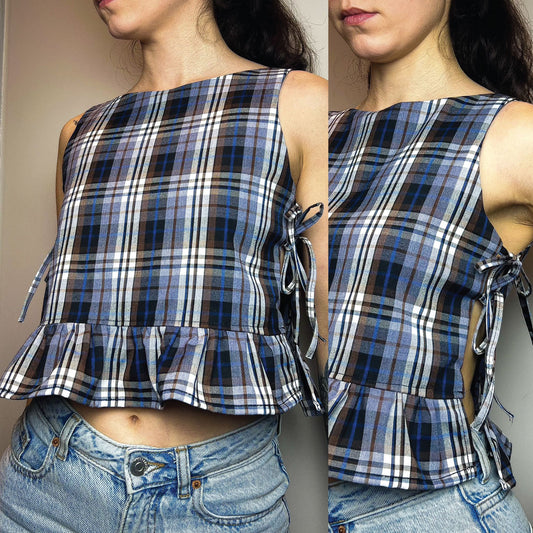
The Avocado Print Lani: Made from Standard Cotton. It’s sturdy, holds its shape, and has a smooth finish. The avocado print looks crisp because the weave is tight.
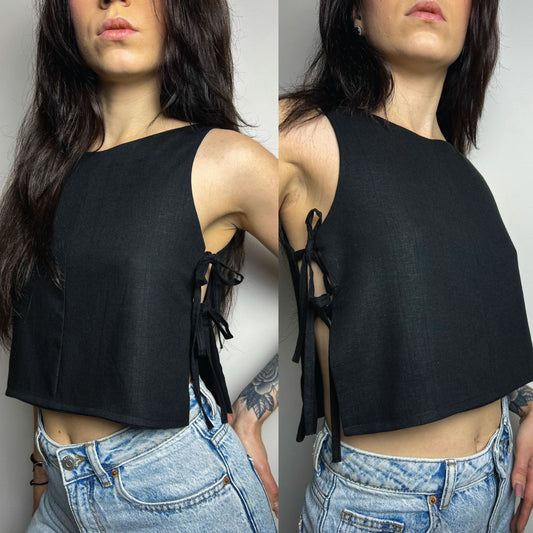
The Black Lani: Made from Muslin. Suddenly, the top feels more "earthy" and relaxed. 4
Cotton is the ultimate "safety" fabric. It’s easy to pin, easy to sew, and doesn't stretch out of shape while you’re working. Muslin, on the other hand, is a specific type of plain-weave cotton. It is breathable and has a slightly more rustic, textured feel. While they are cousins, the Muslin version will always look softer and more casual than the printed Cotton version.
2. Muslin vs. Gauze: The "Crinkle" Factor
People often confuse these two, but they behave very differently:
Muslin: Sturdier and more opaque. Great for structured summer tops.
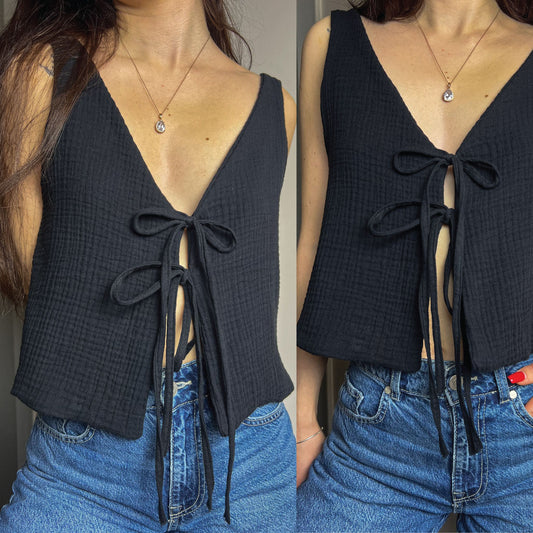
Gauze (especially Double Gauze): This is much airier and often has a natural "crinkle" or "bubble" texture.
The Result: If you sew a structured button-down shirt in Gauze, it will look beachy and loose. If you sew it in Muslin, it will look more like a classic utility shirt.
3. Linen: The Beginner’s Luxury
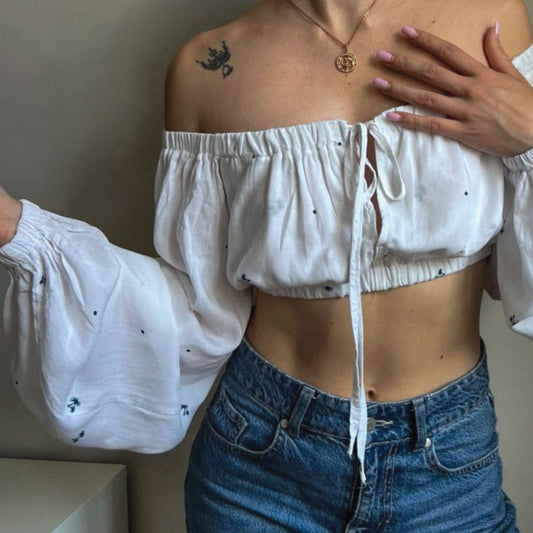
Linen is a dream for beginners. Like cotton, it stays put under the presser foot. However, linen has "soul." It wrinkles (and that’s okay!), and it has a beautiful weight that makes even a simple skirt look expensive.
Pro Tip: Linen has a looser weave than cotton, so your finished garment will have more "movement." It feels cooler on the skin and gets softer with every single wash.
4. Artificial Silk (Rayon/Viscose) vs. The Rest
Now, let’s talk about the "Danger Zone" for beginners: Artificial Silk (Rayon or Viscose). While cotton and linen are "stable," artificial silk is "fluid." It is slippery, it shifts when you try to cut it, and it grows under the needle.
Cotton/Linen: The garment will stand away from the body (structured). Artificial Silk: The garment will cling and drape over the body (fluid).
If you use Rayon for a pattern designed for Cotton, your dress might end up looking limp and saggy instead of crisp and flared. The fabric choice literally dictates the silhouette.
Why doesn't my garment look like the pattern?
Pattern designers choose a specific fabric to photograph because it highlights the "intended" shape. If the pattern shows a structured dress with puffy sleeves and you use a thin, artificial silk, those sleeves will collapse. They can't puff—the fabric doesn't have the "bones" for it.
The Lesson: Study, Sew, Repeat
You have to learn and learn again about fabric properties. Touch everything in the fabric store. Read the labels. Before you buy, unroll a yard of fabric and see how it hangs over your arm.
Does it stand up? (Structured)
Does it fall in soft folds? (Drapey)
Your choice of fabric is the most important design decision you will make. Respect the fiber, and your sewing will reach a whole new level!